Average Vertical Jump by Age (and Gender)
Vertical jump rises through the teen years, peaks around ages 19–25, then declines slowly with age. For untrained adults, males average about 16–20 inches and females about 12–16 inches. A solid teen male typically lands in the mid-to-high teens, and a high schooler clearing 24 inches is jumping well above average.
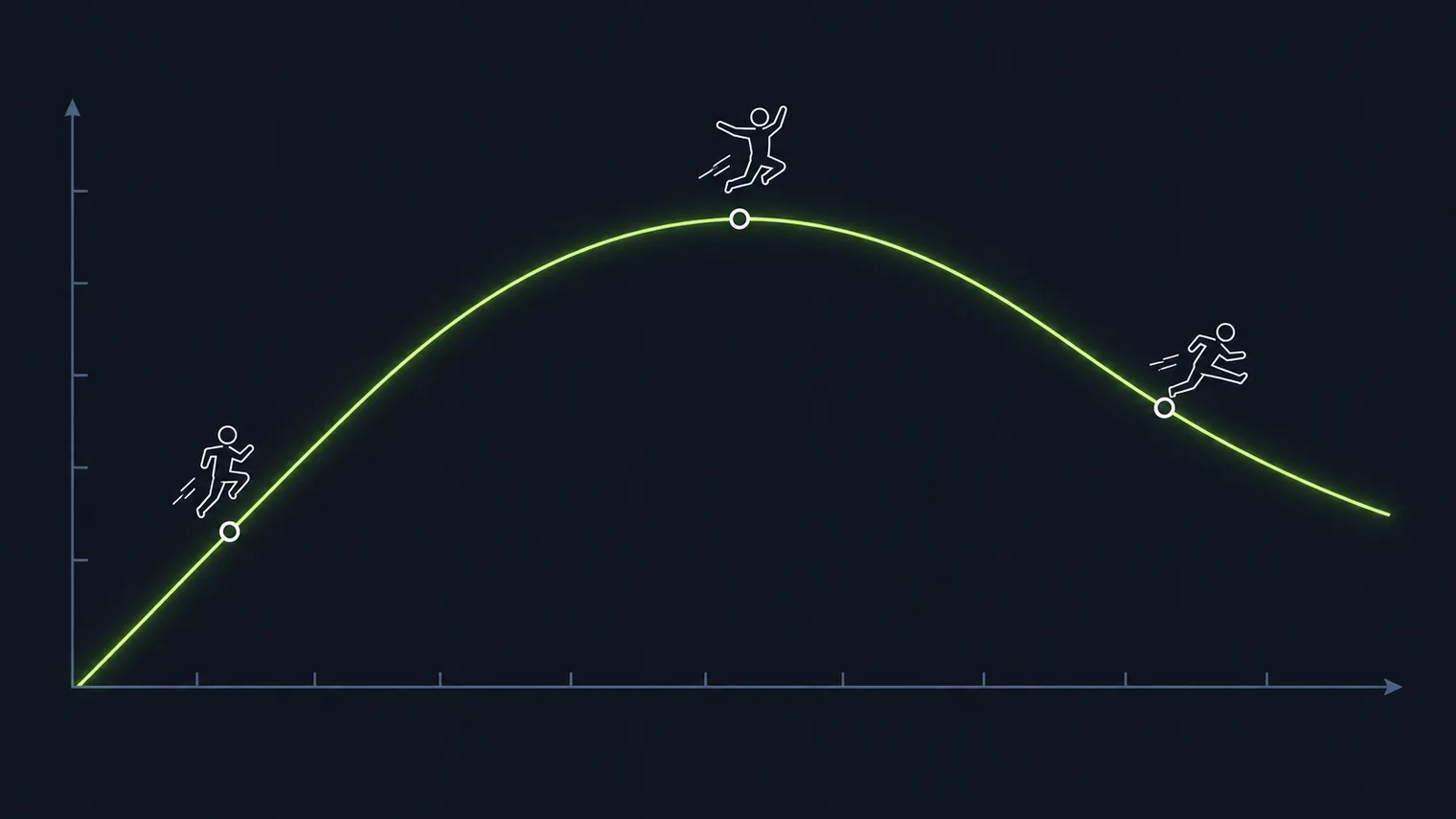
Quick-reference vertical jump chart by age (males)
The numbers below are typical standing vertical jump ranges for males who are reasonably active but not specialized jump athletes. Find your age group, then compare your own jump to the range.
| Age group | Average vertical (inches) | Approx. cm |
|---|---|---|
| 10–12 | 11–14 | 28–36 |
| 13–15 | 14–17 | 36–43 |
| 16–18 | 16–20 | 41–51 |
| 19–25 | 18–22 | 46–56 |
| 26–35 | 16–20 | 41–51 |
| 36–45 | 14–18 | 36–46 |
| 46+ | 11–15 | 28–38 |
These are population averages, not athlete numbers. Trained basketball or volleyball players routinely jump well above the top of each range, and that is normal for them. If your goal is to compare yourself to other everyday people your age, this chart is the right yardstick.
Female vertical jump by age (approximate)
Female vertical norms are less standardized than male ones, so treat these figures as approximate rather than precise measured standards. Across the general population, untrained adult females average roughly 12–16 inches, with women in their mid-twenties typically around 14 to 15, and the by-age pattern follows the same rise-and-decline shape as males.
As a rough guide, expect female youth jumps to sit a couple of inches below the male ranges in the chart above at each age, then settle into that 12–16 inch adult band by the late teens and twenties. The data here is sparser than it is for males, so use these numbers to get a sense of "around where should I be" rather than as a hard pass-fail line. A female athlete clearing 24 inches or more is jumping at an elite level for the general population.
How to read the chart correctly
These ranges assume a standing vertical jump with an arm swing, measured from a flat-footed start. That detail matters, because the same person can post very different numbers depending on how the test is run.
- Standing vertical: you start still, bend, and jump straight up with no run-up. This is the number the chart uses.
- Approach (running) vertical: you take a few steps before jumping. This is usually 2 to 6 inches higher than your standing number, so do not compare an approach jump to the standing averages above.
- Arm swing: swinging your arms up as you leave the ground adds height. A "no arm swing" test will read lower than these ranges.
When in doubt, measure a standing jump with a full arm swing. That keeps your number comparable to the chart and to most published vertical jump norms.
Decade-by-decade: how vertical changes through life
Vertical jump climbs steadily through childhood and the teen years, peaks in the early twenties, and then eases down a little each decade. Here is what each stage usually looks like.
Under 13
Most boys ages 10–12 jump around 11–14 inches. At this age, coordination and timing matter as much as strength, and numbers vary widely depending on size and sports background. Big jumps here are nice but not predictive; plenty of late bloomers catch up fast in the mid-teens.
Ages 13 to 15
This is where the jump starts climbing. The typical range for males is 14–17 inches, and growth spurts plus rising strength push the number up quickly. A 13, 14, or 15 year old in this band is right on track. Clearing 17 inches at this age is a strong sign.
Ages 16 to 18
High schoolers usually land in the 16–20 inch range. A "good" vertical for a high schooler depends on the sport, but anything in the low twenties is above average for the general population, and 24 inches or more puts a teen in athletic territory. If you are 16, 17, or 18 and sitting below 16 inches, that is a sign you have room to gain with focused training, not a permanent ceiling.
Ages 19 to 25
This is the peak window. Males average 18–22 inches and females 12–16 inches here, and trained athletes are usually at their highest verticals during these years. Fast-twitch muscle, tendon stiffness, and neuromuscular coordination all line up well in the early twenties.
Ages 26 to 35
The decline starts, but it is gentle. Males aged 26 to 35 typically settle into 16–20 inches. Most of the early drop comes from training less rather than from age itself; people who keep doing explosive work hold onto their jump remarkably well into their thirties.
Ages 36 to 45
The slide becomes easier to see, though it is still only a few inches: the 36–45 range averages about 14–18 inches. Power fades faster than general strength with age, which is why vertical jump is one of the first things to soften.
Ages 46 and beyond
From 46 on, the average sits around 11–15 inches and continues to ease down by a few inches per decade. The good news is that explosive training slows this curve, and many older athletes out-jump sedentary people half their age.
Is my vertical good for my age?
Compare your standing jump to your age group's range, then rate yourself against the band. If you land in the listed range, you are average for your age. Sitting above the top number means above average; below the bottom number means there is clear room to improve.
- Average: inside your age group's range in the chart.
- Above average: a few inches over the top of your range.
- Athletic: well above the range. For adult males that is roughly 24 inches and up; elite is 28+ inches. For adult females, 16 inches and up is above average, 20 and up is very good, and 24+ is elite.
- Room to grow: below the bottom of your range. This is common and very trainable, especially for teens.
Why vertical jump changes with age
Vertical jump tracks explosive power, and power depends on factors that rise through youth and slowly fade in adulthood. Three things drive the curve.
- Fast-twitch muscle fibers: these power quick, forceful movements like a jump. They develop strongly through the teens and early twenties, then gradually decline if they are not trained.
- Tendon elasticity and stiffness: springy, stiff tendons store and return energy on takeoff. Younger tendons tend to return that energy more efficiently, which adds free inches.
- Neuromuscular coordination: jumping high means firing the right muscles in the right order, fast. This skill sharpens with practice and is a big reason teens improve so quickly once they train it.
None of these are fixed. Strength and plyometric training can raise your jump at almost any age; the age chart shows the untrained baseline, not your personal limit.
How to measure your vertical jump
Measuring is simple and you can do it with a wall. The goal is a clean, repeatable standing number you can compare to the chart and track over time.
- Standing reach: stand flat-footed against a wall, reach up with one hand, and mark the highest point you touch. This is your reach height.
- Jump and mark: from a standstill, bend, swing your arms, jump as high as you can, and touch the wall at the top. Mark that point. Chalk or a small piece of tape on your fingertips makes the mark easy to see.
- The difference is your vertical: subtract your reach height from your jump height. Take your best of three tries with full rest between jumps.
Warm up first, jump on a non-slip surface, and measure the same way each time so your numbers stay comparable. Once you have a baseline, retest every few weeks to see your progress.